Walking is something that many of us take for granted—that is, until each step is accompanied by pain. Tarsal tunnel syndrome (TTS) can start with subtle discomfort, but over time, it can begin to interfere with basic mobility and daily life. Fortunately, physical therapy can help manage and alleviate the symptoms associated with this condition. Targeted tarsal tunnel syndrome exercises can provide relief from discomfort, along with increased strength and mobility. In this article, we’ll outline eight TTS exercises and provide tips for performing them effectively.
What Is Tarsal Tunnel Syndrome?
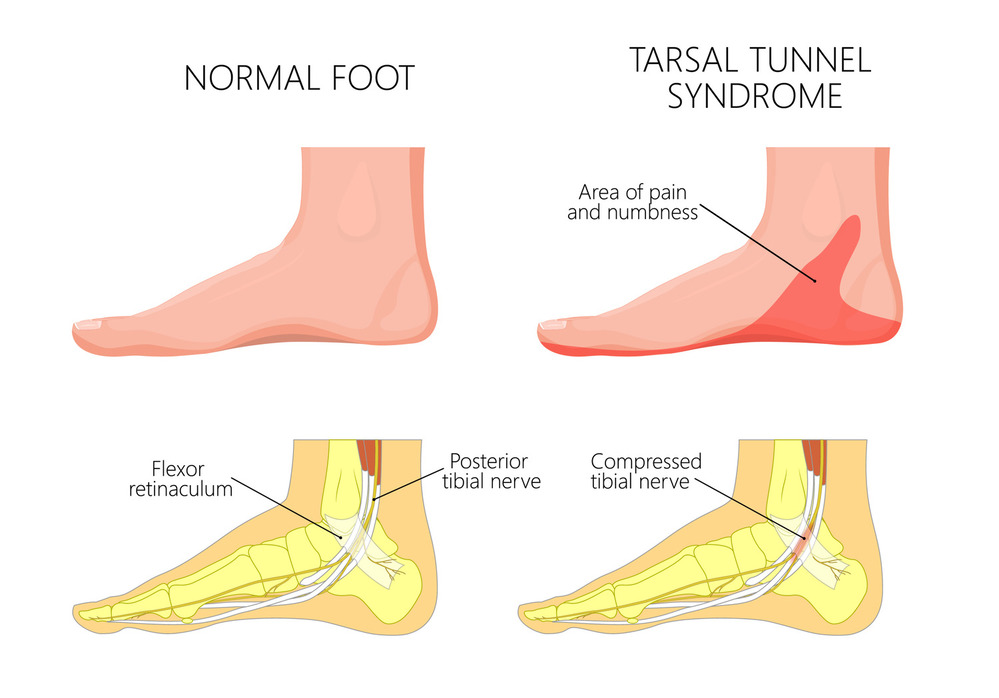
TTS occurs when there is compression or damage to the posterior tibial nerve. The posterior tibial nerve runs through the tarsal tunnel—a narrow space made up of bones and ligaments located on the inside of the ankle.
Symptoms of Tarsal Tunnel Syndrome
TTS usually causes discomfort on the inside of the ankle or bottom of the foot. This discomfort may be characterized by:
- Tingling, burning, or numbness
- Shooting pain
- Muscle weakness
- Pain that worsens with prolonged physical activity
Causes of Tarsal Tunnel Syndrome
Common causes of TTS include:
- Flat feet or high arches
- Ankle sprains
- Arthritis and other inflammatory conditions
- Masses or tumors near the tibial nerve
- Diabetes, hypothyroidism, and autoimmune disorders
- Repetitive stress from certain activities, such as running or prolonged walking
Benefits of Physical Therapy for Tarsal Tunnel Syndrome
Physical therapy is a form of non-invasive treatment that is highly recommended for TTS patients. It focuses on strengthening and stretching the muscles that support the foot and ankle to improve mobility and relieve the pain caused by nerve compression. Additionally, physical therapy can help reduce inflammation, promote healing, and prevent future flare-ups, helping TTS patients return to their daily routines. With consistent effort, TTS patients can use physical therapy to manage symptoms effectively.
Exercises for Tarsal Tunnel Syndrome
If you are experiencing pain as a result of TTS, the eight exercises outlined below may provide you with some relief:
Ankle Circles
Ankle circles can improve range of motion and ease tension. To perform this exercise, follow these steps:
- Rotate your ankle clockwise 10 times
- Rotate your ankle counterclockwise 10 times
- Repeat on the other ankle
- Perform this exercise 2 to 3 times a day
Ankle Pumps
Ankle pumps stimulate circulation, which is essential to healing. Here is how to perform this exercise:
- Slowly flex your ankle to point your toes upward
- Then, point your toes forward by extending your ankle
- Repeat 15 to 20 times and then switch to the other foot
Toe Curls
Toe curls are an excellent foot-strengthening exercise for those who want to improve balance and flexibility. This exercise can be done two ways—sitting or standing. Follow these steps to perform toe curls:
- Place a small towel on the floor beneath your feet
- Using your toes, scrunch the towel toward you
- Hold the position for 2 to 3 seconds and then release it
- Repeat 10 to 15 times
Toe Spreads
Toe spreads can reduce nerve compression and build strength and flexibility in the feet. To perform this exercise, follow these steps:
- Spread your toes as far apart as possible from one another
- Hold the position for 5 seconds before letting go
- Repeat 10 to 15 times
Calf Stretches
Tight calves can limit ankle mobility and increase nerve compression. To stretch your calf muscles, follow these steps:
- Stand facing a wall
- Place your hands against the wall for support
- Step one foot back
- Bend the other leg slightly while keeping the back leg straight and both heels pressed flat on the ground
- Shift your weight onto your front leg to deepen the stretch
- Hold the position for 30 seconds and then switch to the other leg
- Repeat 3 times on each leg
Heel-to-Toe Walking
Heel-to-toe walking is great for improving balance. Here are the steps to perform this exercise:
- Place a line of tape on the floor to help you walk in a straight line
- Make sure you are on a hard, flat surface
- Walk forward, making sure that with each step you take, your heel touches and aligns with the opposite foot’s toes
- You can make this harder by looking straight ahead
- Perform 2 to 3 sets of 10 steps
- As you improve, try to walk backward using the same heel-to-toe motion
Resistance Band Exercises
Using resistance bands can be an effective way to strengthen your feet and ankles. You can add a resistance band to the following exercises to make them more challenging:
- Ankle Dorsiflexion: To start, anchor one end of the resistance band to a stable object and loop the other end around the top of your foot. Pull your toes towards your shin against the resistance. Make sure that the motion is slow and controlled.
- Ankle Plantarflexion: Loop one end of a resistance band around the ball of your foot and then hold the other end with your hand. Point your toes away from your body against the resistance of the band.
- Ankle Inversion and Eversion: This exercise involves turning your feet inward and outward without rotating your legs. To perform ankle inversion or eversion, put one end of a resistance band around the ball of your foot and hold the other end taut in the direction opposite to that in which you are going to move your foot. Then, if you are performing ankle eversion, slowly turn your foot outward against the resistance and then bring it back in. If you are performing ankle inversion, slowly turn your foot inward and then relax it. Repeat each exercise 8 to 12 times on each foot.
Standing on One Leg
By working to increase the amount of time you are able to stand on one leg, you can improve your balance and strengthen the muscles that support the ankle.
- Start by raising one foot off the ground while holding a chair for support
- Try to hold the position for 30 seconds
- Perform 3 sets on each foot
- As you get better at the exercise, you can let go of the chair or close your eyes
- For a challenge, you can try standing on a foam pad or wobble board
How to Perform Tarsal Tunnel Syndrome Exercises Safely?
When you start incorporating these exercises into your routine, you will need to be gentle with your body and practice good form before transitioning to higher resistance or increasing the number of repetitions. If you feel your symptoms worsening in response to the exercises, stop immediately and consult a healthcare professional before continuing. Trying to push through the pain can cause even more harm to the affected area. You should be using resistance bands that are light enough that you can complete the recommended number of repetitions without your form breaking down. You should only increase the difficulty of the exercises once your starting resistance and repetitions have become too easy. Above all, we recommend listening to your body and consulting a physical therapist for personalized guidance.
When to Seek Medical Attention?
While exercising may relieve symptoms of TTS for some, many TTS patients require additional treatment to make a full recovery. You should consider seeking medical attention if you are struggling with persistent pain or discomfort that does not improve with physical therapy or other home remedies. You should also consult a healthcare professional if your symptoms are worsening—e.g., your numbness has spread, your muscles are weakening, or your pain has increased. Early intervention is key to making a prompt recovery.
Take Control of Your Health With Dr. Gary Driver
Don’t allow foot or ankle pain to prevent you from engaging in the activities you enjoy. Gentle exercises and professional guidance can go a long way in alleviating the symptoms of TTS. For expert care, make an appointment with fellowship-trained foot and ankle surgeon Dr. Gary Driver. He will provide you with a tailored recovery plan to get you back on your feet in no time!
Frequently Asked Questions
How long does it take for tarsal tunnel syndrome to improve with exercise?
The timeline for improvement varies from person to person depending on the severity of their condition and the consistency with which they exercise.
Can I perform these exercises at home?
Yes, all of these exercises can be performed safely at home. However, if you are unsure about the technique or experience worsening symptoms after performing an exercise, consider consulting a professional.
Are there any exercises I should avoid with tarsal tunnel syndrome?
Avoid high-impact exercises like jumping or running, which put excessive strain on the foot and ankle.
What other treatments can complement physical therapy for tarsal tunnel syndrome?
Other treatments for TTS include pain medication, rest, and wearing supportive footwear. Consult your healthcare provider for personalized recommendations.
Can tarsal tunnel syndrome be cured completely with exercise?
Targeted exercises can significantly reduce the symptoms of TTS and improve overall function. However, complete recovery depends on the underlying cause and unique response of each individual. In some cases, further treatment may be necessary.