Key Takeaways
-
Ankle arthroscopy is a minimally invasive surgical procedure that uses a small camera and specialized instruments inserted through tiny incisions to diagnose and treat problems inside the ankle joint.
-
It is commonly used to address osteochondral lesions, ligament tears, impingement, loose bodies, synovitis (inflammation of soft tissues in the joints), and early-stage arthritis.
-
Good candidates are patients with persistent ankle pain that has not responded to conservative treatments such as physical therapy, bracing, or injections.
-
The procedure offers significant advantages over open surgery, including less scarring, a shorter recovery period, and a lower risk of complications.
-
Most patients can return to normal activities within two to three months, depending on the extent of the repairs performed.
-
Patients with severe end-stage arthritis, active joint infections, or poor circulation may not be suitable candidates.
Foot and ankle pain can make walking, exercising, or just getting through the day difficult. When conservative treatments like rest, physical therapy, or steroid injections fail to provide relief, a more direct approach may be needed to identify and resolve the underlying issue. Ankle arthroscopy is a highly effective, minimally invasive surgical technique that allows a fellowship-trained foot and ankle surgeon to diagnose and treat a wide range of joint problems. This procedure uses advanced technology to address the root cause of your discomfort, helping you return to the activities you love with less downtime than traditional open surgery.
Understanding Ankle Arthroscopy
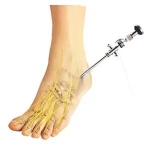
Ankle arthroscopy is a surgical procedure that uses a specialized, pencil-sized instrument called an arthroscope, a device containing a light and a high-definition camera. The surgeon inserts it through a few small incisions, often less than half an inch wide, to view the inside of the ankle joint on a video monitor. From there, targeted repairs can be performed using miniature surgical tools, minimizing damage to the surrounding healthy tissues.
Conditions Commonly Treated with Ankle Arthroscopy
Ankle arthroscopy is a versatile tool for addressing numerous intra-articular problems (issues that occur within the joint). As a fellowship-trained foot and ankle surgeon, Dr. Gary Driver uses advanced techniques to treat complex conditions, including the following:
-
Osteochondral lesions of the talus: Damage to the cartilage and underlying bone of the talus, often resulting from trauma.
-
Ankle impingement: Bone spurs or inflamed soft tissue that pinch the joint and restrict movement.
-
Loose bodies: Floating fragments of bone or cartilage that can cause the joint to lock or catch.
-
Ligament tears: Damage to the bands of tissue that stabilize the ankle, leading to chronic instability.
-
Synovitis: Inflammation of the synovial lining of the joint, which causes persistent swelling and pain.
-
Early-stage ankle arthritis: A common degenerative joint disease that results in pain, stiffness, and can lead to deformity of the affected ankle. Removal of debris and inflamed tissue can improve motion and reduce discomfort before advanced joint degeneration occurs.
-
Post-traumatic scar tissue: Arthrofibrosis, or the buildup of thick scar tissue following an injury, which limits joint mobility.
Who Is a Good Candidate for Ankle Arthroscopy?
Not every patient requires surgery, and we believe in a stepwise approach, exploring conservative treatments before recommending surgical intervention. However, you may be an ideal candidate for ankle arthroscopy if you experience the following:
-
You have persistent ankle pain, swelling, or stiffness that has not improved with rest, bracing, physical therapy, or medications.
-
You experience mechanical symptoms such as the ankle locking, catching, or giving way during normal activities.
-
You have a history of recurrent ankle sprains leading to chronic instability.
-
Imaging tests like X-rays or an MRI show loose bone fragments, cartilage damage, or early arthritis that can be addressed without open surgery.
-
You do not have severe, advanced ankle osteoarthritis or active infections in the skin surrounding the joint, which might require different surgical approaches.
Benefits of Ankle Arthroscopy
Compared to traditional open surgery, ankle arthroscopy offers several significant advantages. Treatment plans are tailored to your specific needs, focusing on the root cause of your discomfort while supporting the best possible recovery experience.
Minimally Invasive
The procedure causes far less trauma to the skin, muscles, and soft tissues surrounding the joint because it only requires two or three tiny incisions. Patients experience smaller, less noticeable scars and a lower risk of wound-healing complications. The preservation of the joint capsule and surrounding structures, thanks to its less invasive nature, also helps maintain natural joint mechanics.
Faster Recovery than Open Surgery
Reduced tissue damage translates directly into a quicker rehabilitation timeline. Many patients return home the same day as their procedure and can begin walking in a supportive boot within one to two weeks. The overall recovery period is generally much shorter than that of open ankle surgery, although the exact timeline depends on the specific repairs performed. This means that you can resume your normal daily activities, work, and sports more rapidly.
Lower Complication Risks
Complications occur at a very low rate with ankle arthroscopy. The small incisions significantly decrease the risk of postoperative infections and minimize blood loss during the procedure when compared to open ankle surgery. The targeted nature of the surgery also reduces the likelihood of extensive nerve or blood vessel damage. Given these characteristics, arthroscopy is widely recognized as a safe and effective option, though all surgeries do still carry some risk.
Improved Treatment Precision
The arthroscope provides a magnified, high-definition view of the ankle's internal structures, offering diagnostic accuracy that can surpass that of advanced imaging like an MRI. Through this direct visualization, the surgeon can identify subtle cartilage defects or small loose bodies that might otherwise be missed. Miniature surgical instruments then enable precise, localized repairs without disturbing adjacent healthy tissues, which leads to better functional outcomes.
Preparing for Ankle Arthroscopy
Proper preparation plays an important role in achieving a successful surgery and a smooth recovery. We understand how foot and ankle pain can impact your daily life, and we are here to guide you through every phase of the process.
Medical Evaluation and Imaging Tests
Before scheduling the procedure, you will undergo a comprehensive medical evaluation to confirm you are healthy enough for surgery. This covers a review of your medical history, current medications, and any underlying health conditions. Your surgeon will also order specific imaging tests, such as X-rays, an MRI, or a CT scan, to map out the damage within the joint. The surgical team uses these images to plan the exact approach and determine which instruments will be necessary.
Pre-Surgery Instructions
In the days leading up to your arthroscopy, you will receive detailed instructions on how to prepare. Fasting guidelines, such as avoiding food and drink for a set number of hours before the operation, are typically included. You may also need to temporarily stop taking blood-thinning medications or supplements to reduce the risk of bleeding. If you smoke, quitting at least four weeks prior to surgery is strongly advised, as nicotine impairs the body's ability to heal.
Risks and Considerations
Ankle arthroscopy is a safe procedure, yet understanding the potential risks and limitations allows you to make a more informed decision about your care.
Potential Complications
Inherent risks exist with any surgical intervention, though they occur infrequently with arthroscopy. The most common complication is temporary numbness or tingling on the top of the foot, resulting from irritation of the superficial nerves near the incision sites. Other rare risks include infection, excessive bleeding, blood clots (deep vein thrombosis), or damage to surrounding blood vessels and tendons. Your surgical team follows strict protocols to minimize these risks and monitor your safety throughout the procedure.
Limitations of the Procedure
Ankle arthroscopy is highly effective for many conditions, but it is not a universal solution for all ankle problems. It cannot reverse severe, end-stage osteoarthritis where the joint space has completely deteriorated. In cases of significant bone deformity or massive ligament ruptures, a more extensive open surgery may be necessary to achieve desired stability and alignment of the joint. During consultation, your surgeon will clearly explain whether arthroscopy can fully address your specific condition or if an alternative approach is required.
Recovery After Ankle Arthroscopy
The goal of treatment is to help you return to your everyday activities without pain. With this in mind, a structured recovery plan becomes important for achieving the best possible outcome after surgery.
Immediate Post-Surgery Care
Ankle arthroscopy is typically an outpatient procedure, so you can recover in the comfort of your own home. In the first few days, keep your ankle elevated above your heart and apply ice regularly to manage swelling. You will likely wear a splint or a soft dressing, and crutches may be needed to keep weight off the joint. Your surgeon will prescribe pain medications to keep you comfortable and provide specific instructions on how to keep your incisions clean and dry.
Recovery Timeline at a Glance
The table below outlines a general recovery schedule. Your surgeon will provide a personalized plan based on the specific procedure performed.
| Timeframe | Activity and Care |
|---|---|
| Days 1–3 | Keep the ankle elevated above heart level; apply ice; take prescribed pain medications; rest with a splint in place. |
| Week 1 | First post-op visit; surgeon checks incisions; gentle range-of-motion exercises may begin. |
| Weeks 2–4 | Transition from splint to walking boot; begin physical therapy; partial weight-bearing with crutches. |
| Weeks 4–6 | Full weight-bearing in boot, then transition to a comfortable athletic shoe as tolerated. |
| Months 2–3 | Resume low-impact activities, light work duties, and driving (right ankle: when braking is pain-free). |
| Months 3–6 | Return to running, sports, or heavy labor; timing varies based on the procedure and individual healing. |
Physical Therapy and Rehabilitation
Physical therapy usually begins within one to two weeks after surgery and is a key part of the healing process. A physical therapist will guide you through gentle range-of-motion exercises to prevent stiffness and gradually introduce strengthening routines to support the joint. Depending on the extent of your surgery, you will transition from a splint to a walking boot, and eventually back to regular shoes. Committing to your rehabilitation exercises will help you regain full mobility and facilitate your safe return to high-impact activities or sports.
Alternatives to Ankle Arthroscopy
If you are not a candidate for arthroscopy or prefer to delay surgery, other options are available to manage your ankle condition.
Non-Surgical Treatment
Conservative care is prioritized whenever possible. Non-surgical options include extended periods of rest, activity modification, and the use of specialized braces or orthotics to stabilize the joint. In addition to these changes, physical therapy can also be utilized to strengthen the surrounding muscles and improve joint flexibility. Targeted corticosteroid injections are an option for temporarily reducing severe inflammation and pain, allowing you to participate more comfortably in rehabilitation.
Open Ankle Surgery
When the damage to the joint is too extensive for an arthroscopic approach, open ankle surgery may be recommended. A larger incision gives the surgeon direct access to reconstruct major ligament tears, repair complex fractures, or perform an ankle fusion or a total ankle replacement for severe arthritis. Open surgery requires a longer recovery period and carries a higher risk of complications, yet it is sometimes the only way to effectively restore function to a severely compromised joint.
When to See Dr. Gary Driver About Ankle Pain
If ankle pain, swelling, or instability is interfering with your quality of life, it may be time to consult a specialist. Dr. Gary Driver is a triple board-certified, fellowship-trained foot and ankle surgeon serving patients in Fort Worth, Weatherford, and the surrounding DFW communities. With over 15 years of experience and more than 2,000 surgeries performed, Dr. Driver offers both advanced surgical and non-surgical care tailored to each patient's individual needs. He has been recognized as a "Top Doctor" in Fort Worth every year since 2021, reflecting his commitment to patient-centered care built on honesty, integrity, and fairness.
Dr. Driver takes a conservative-first approach, meaning surgery is only recommended when other treatments have not provided adequate relief. If ankle arthroscopy is the right option for you, he will walk you through every step of the process so you feel confident and informed in your decision.
Frequently Asked Questions (FAQs)
What is ankle arthroscopy used for?
Ankle arthroscopy is used to diagnose and treat conditions inside the ankle joint. Common uses include removing loose bone fragments, repairing torn cartilage, addressing bone spur impingement, and cleaning out inflamed tissue or scar tissue.
How long does it take to recover from ankle arthroscopy?
Recovery timelines vary based on the specific repairs performed. Many patients can transition to a walking boot within one to two weeks, and a full return to normal activities and sports generally takes two to three months, provided you follow your physical therapy plan.
Is ankle arthroscopy painful?
Ankle arthroscopy is generally much less painful than open surgery because the incisions are very small. Most patients experience mild to moderate discomfort in the first few days, which can be managed effectively with elevation, ice, and prescribed pain medications.
Can you walk immediately after ankle arthroscopy?
Most patients are advised to avoid putting weight on their ankle immediately after surgery to protect repairs made to the joint. Crutches and a splint are typically used for the first few days to a couple of weeks, depending on your surgeon's specific instructions.
Who should avoid ankle arthroscopy?
Patients with severe, end-stage ankle arthritis, active infections near the joint, or poor blood circulation in the legs are generally not good candidates for ankle arthroscopy. Alternative treatments or open surgery may be more appropriate in these situations.
Resources
- “Ankle Arthroscopy.” Medline Plus, June, 2025. July 16, 2026. https://medlineplus.gov/ency/article/007584.htm.
- “Osteochondral lesions to the Talus.” Ortho Bullets, February, 2026. July 16, 2026. https://www.orthobullets.com/foot-and-ankle/7034/osteochondral-lesions-of-the-talus.
- “Ankle Arthroscopy.” Dr. Gary Driver. July 16, 2026. https://www.drgarydriver.com/ankle-arthroscopy-surgeon-weatherford-fort-worth-tx/.
- “Anterior Ankle Impingement.” Stanford Medicine. July 16, 2026. https://stanfordhealthcare.org/medical-conditions/bones-joints-and-muscles/ankle-anterior-impingement.html.
- “Loose Bodies in the Ankle or Toes.” Yale Medicine. July 16, 2026. https://www.yalemedicine.org/clinical-keywords/loose-bodies-in-the-ankle-or-toes.
- Fausel, C. “What You Need to Know About Ankle Ligament Tears.” Regenexx. July 16, 2026. https://regenexx.com/condition/foot-and-ankle/ankle-ligament-tears/.
- “Synovitis.” Cleveland Clinic, September, 2023. July 16, 2026. https://my.clevelandclinic.org/health/diseases/synovitis.
- Valasco, B et al. “Arthrofibrosis of the Ankle.” Foot and Ankle Orthopedics, November, 2020. July 16, 2026. https://pmc.ncbi.nlm.nih.gov/articles/PMC8564948/.
- Verlinsky, L. “Ankle Arthritis.” Ortho Bullets, April, 2026. July 16, 2026. https://www.orthobullets.com/foot-and-ankle/7037/ankle-arthritis.
- Ahmad, J. “How to Prepare for Foot or Ankle Surgery…” Foot Care MD. July 16, 2026. https://www.footcaremd.org/resources/how-to-help/how-to-prepare-for-foot-or-ankle-surgery-part-1.
- “Ankle Surgery.” Cleveland Clinic, June, 2024. July 16, 2026. https://my.clevelandclinic.org/health/treatments/21047-ankle-surgery.